
Automation Solution Engineering
SPM · HYDRAULIC · PNEUMATIC · CONVEYOR · PANELS
Machines that make holes and threads are among the most requested special purpose machines. A drilling SPM can drill many holes in one stroke, a tapping SPM cuts threads with depth control, and a piercing SPM punches holes or slots in sheet metal or tube. This guide explains how each works, the options for drives and feeds, and what to specify before you order.
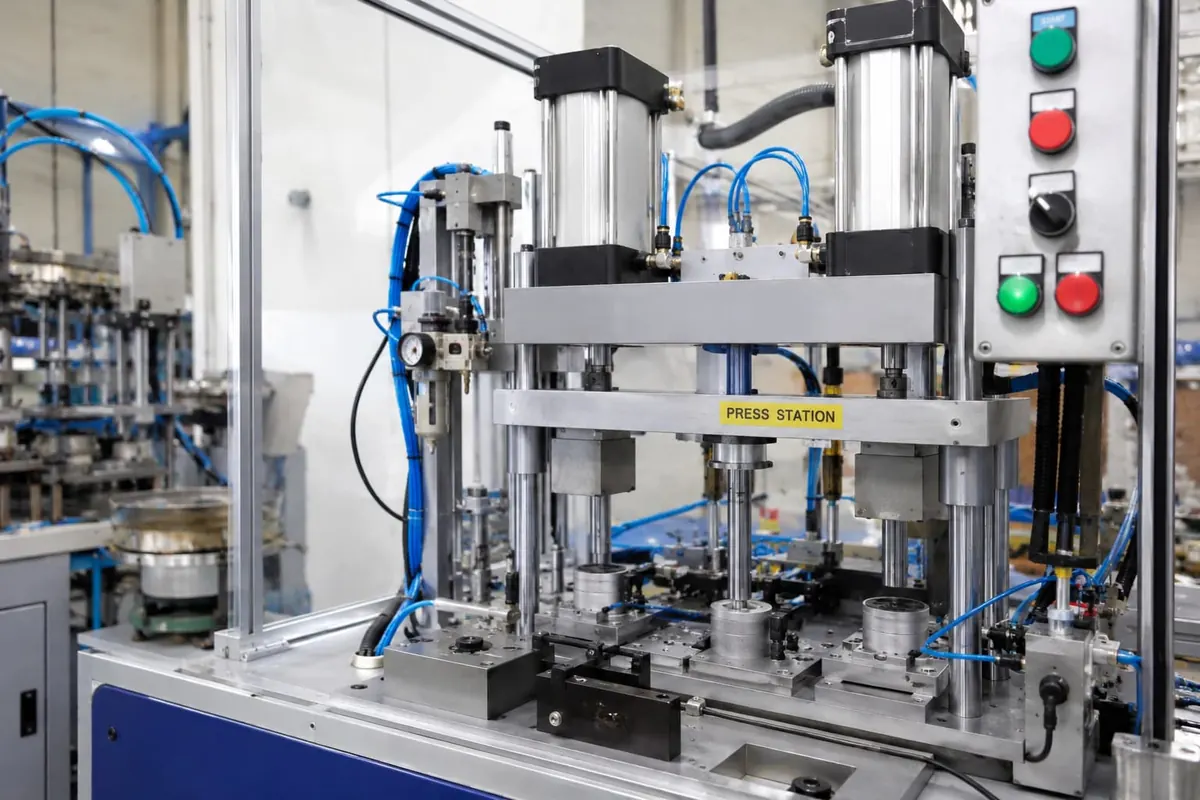
A drilling SPM holds the part in a fixture and feeds one or more drills into it. The most common forms are:
Feeds can be hydraulic (smooth, high thrust), pneumatic with hydro-check (simple and low cost for light drilling) or servo or ball-screw driven (precise and programmable).
Tapping machines cut internal threads after drilling. Options include:
Torque and depth monitoring is valuable because a broken tap left in a part can damage the next operation or reach the customer.
When bores, faces or slots must be machined, standard slide or way-type units can be mounted on a base and combined with drilling and tapping heads. This gives a dedicated machining station for one component family.
A piercing machine pushes a punch through the material to make a hole or slot, usually with a die or support under the part. It is used on sheet metal, brackets, tubes and sections.
The hydraulic ram works with a matching power pack and press frame, and light work can be done on a pneumatic press. Our guide to hydraulic press tonnage explains how to estimate the force needed.
One cycle can drill, tap, assemble a part such as a bush or insert, then inspect with sensors or a camera, and reject a bad part. Rotary table or in-line layouts keep handling to a minimum. See the vision inspection machine guide for the checking stage.
| Item | Why it matters |
|---|---|
| Part drawing and material | Decides tooling, spindle power and feed |
| Hole diameter, depth, thread size and tolerance | Decides head type, stroke and accuracy |
| Number and position of holes | Decides multi-spindle or adjustable head |
| Output per hour | Decides single or multi-station layout |
| Loading method | Manual, magazine or automatic feed |
| Quality checks | Torque monitoring, depth sensors, camera, data logging |
Automation Solution Engineering designs special purpose machines for drilling, tapping, piercing, pressing, assembly and testing, with PLC control, hydraulic or pneumatic drives and the fixtures your part needs. Send your drawing and production target and we will recommend a layout. Read the complete list of SPM machine types or visit the SPM machines page.
It is a machine with a gearbox head that drives several drills at fixed positions from one motor. A whole hole pattern is drilled in one stroke, which saves time and keeps hole positions consistent.
Servo tapping gives electronic control of speed, depth and reversal and can monitor torque. This helps detect broken taps, blind holes that are too shallow or oversize holes, and it makes changeover between thread sizes easier.
Both use a hydraulic ram. Servo hydraulic piercing uses a servo-driven pump that controls force and speed more precisely and uses less energy while holding, which improves repeatability and reduces deformation around the hole.
Yes. A combination SPM can drill, tap, assemble and inspect in one cycle on a rotary table or in-line layout, then reject faulty parts automatically.
Send the part drawing or sample, material, hole and thread sizes and positions, target output per hour, and whether you need torque monitoring, camera inspection or data logging. You can call or WhatsApp 8867148793.