Hydraulic Power Pack and Cylinder Guide: Components, Working and Selection
By Venkatesh Tandel, Automation Solution Engineering · Ankola, Karnataka · October 2026
Almost every hydraulic press, piercing machine and heavy clamping SPM runs on a hydraulic power pack and cylinder. The power pack makes pressurised oil, the valves direct it and the cylinder turns it into force and motion. This guide explains each part, the main cylinder types and what to define when specifying a system. It supports our hydraulic press page and the tonnage guide.
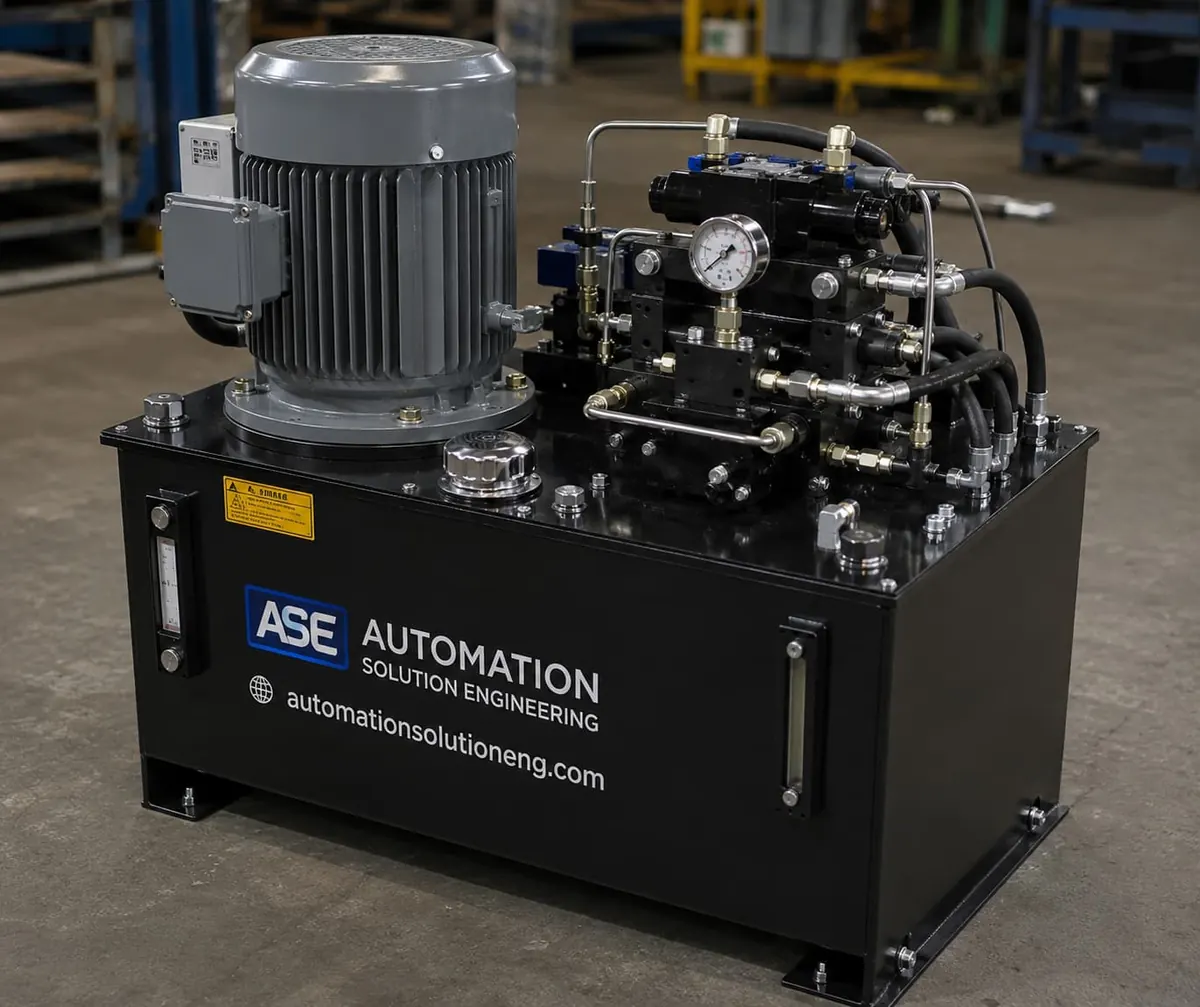
Hydraulic power pack built by Automation Solution Engineering
What Is a Hydraulic Power Pack?
A hydraulic power pack (power unit) is a self-contained unit that supplies pressurised oil. It normally has:
Electric motor that drives the pump.
Pump (gear, vane or piston) that moves the oil and creates flow.
Tank (reservoir) that holds oil, helps cool it and lets air and dirt settle.
Relief valve that sets the maximum system pressure and protects the system.
Directional control valves that send oil to either side of the cylinder, operated by solenoids.
Filters on suction, return or pressure lines to keep oil clean.
Pressure gauge and, as needed, a pressure switch, level gauge, thermometer and cooler.
How the Hydraulic Circuit Works
The motor turns the pump, which pushes oil through the valve to the cylinder. Force equals oil pressure multiplied by piston area, and speed depends on oil flow and piston area. The relief valve limits pressure, and flow control valves, pressure reducing valves or proportional valves adjust speed and force when needed.
Types of Hydraulic Cylinders
Type
Description
Used in
Double acting
Oil pushes the piston both ways
Presses, clamps, most machines
Single acting
Oil pushes one way; load or spring returns it
Lifts, jacks, simple pushes
Telescopic
Several stages that extend for a long stroke
Tippers, lifts
Tie-rod cylinder
End caps held by external tie rods
Industrial machines
Welded body cylinder
Compact welded barrel
Mobile and heavy duty
Key Specifications
Bore and rod diameter: decide force and speed.
Stroke: the working travel needed, plus allowance for tooling.
Working pressure: must match pump, valves and hoses.
Mounting style: flange, clevis, foot or trunnion.
Seals and rod finish: matched to oil, temperature and duty cycle.
Cushioning or position sensor: where smooth stops or feedback are needed.
Sizing a Power Pack
Work out the force needed, then the cylinder bore and the pressure required.
Work out the speed needed, which sets the pump flow.
Motor power follows pressure and flow.
Tank size gives enough oil volume and cooling for the duty cycle.
Add a cooler if the oil heats up on long or continuous cycles.
Common Hydraulic Problems and Prevention
Overheating: usually from low oil level, restricted flow or heavy duty without a cooler.
Slow or weak movement: worn pump, internal leakage, wrong relief setting or low oil.
Noise: air in oil or a blocked suction filter.
Leaks: worn seals, loose fittings or damaged rods.
Contamination: the biggest cause of valve and pump wear, so change filters and oil at the right interval.
Hydraulic Systems from ASE
Automation Solution Engineering designs and builds hydraulic presses, power packs and hydraulic SPM machines, including piercing machines and scrap balers, with electrical control panels. Share the force, stroke, speed and duty cycle needed for a proposal.
Frequently Asked Questions
What is a hydraulic power pack?
It is a unit that supplies pressurised oil, consisting of a motor, pump, tank, relief valve, directional control valves, filters and gauges. It drives hydraulic cylinders in presses and machines.
How do I calculate hydraulic cylinder force?
Force equals oil pressure multiplied by the piston area. A larger bore gives more force at the same pressure, and oil flow sets how fast the cylinder moves.
What is the difference between single acting and double acting cylinders?
A single acting cylinder is powered in one direction and returns by load or spring. A double acting cylinder is powered in both directions, so it is used in most presses and machines.
What should I send for a hydraulic system quotation?
Send the force or tonnage needed, stroke, speed, duty cycle, mounting space and control needs. You can call or WhatsApp 8867148793.
Need a machine built for your process? Share your component drawing, target output and process details with Venkatesh Tandel on phone or WhatsApp and we will propose a design and quotation.